: It allows for the creation of personal hosts that can be shared with friends or teams.
On Linux systems, a reflect 4 proxy is typically achieved using the Netfilter framework via iptables or nftables . This utilizes the chain and DNAT (Destination Network Address Translation). Step 1: Enable IP Forwarding
: Users in jurisdictions with internet censorship use proxies to access restricted information or bypass site-specific geo-blocking. reflect 4 proxy
: The proxy masks the client's IP address from the destination server, making it difficult for that server to track or monitor the user's specific activity. Educational Access : Students often use it to access unblocked games and apps during free time. Corporate Security : Businesses may use similar proxy technology to filter internet usage or provide an extra layer of firewall protection against malware. Privacy & Freedom
If you are looking at Reflect4 for privacy, it is important to distinguish its functionality from a VPN: : It allows for the creation of personal
The client does not know a proxy exists.
L4 proxies do not inspect or modify the application payloads. They simply route packets. Step 1: Enable IP Forwarding : Users in
Reflect 4 Proxy: The Ultimate Guide to Self-Hosted Web Proxies
Because a Layer 4 proxy does not decrypt or read the application payload, it spends significantly fewer CPU cycles per packet. It simply reads the incoming TCP/UDP header and forwards the packet. This makes it ideal for high-traffic environments where microseconds matter. 2. Protocol Agnostic Routing
 Arming Devices
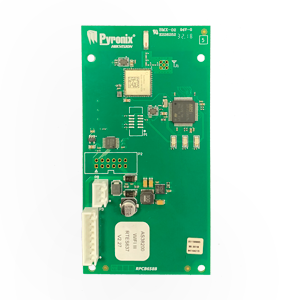 Communication Devices
 Control Panels
 Detectors & Sensors
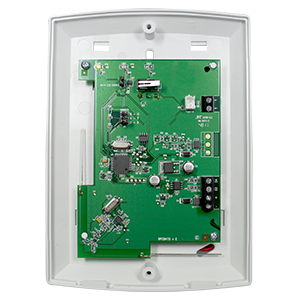 Expanders
 Legacy Products
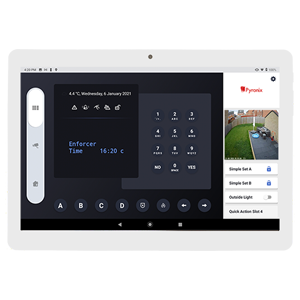 Smart Home Devices
 Software & Services
 Sounders & Bells
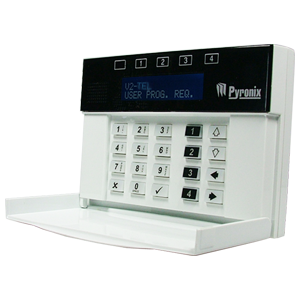 Speech Diallers
 Wi-Fi Cameras